Summer brings long days, bright sunshine, and the promise of lush growth—but it also tests even the healthiest gardens. High temperatures, intense sun, and dry winds can stress plants, wilt leaves, and scorch delicate blooms. Without the right care, an entire season’s worth of work can quickly dry up under the summer heat.
Fortunately, with some smart watering strategies, a few shading tricks, and the right timing, your garden can not only survive but thrive during the hottest months. Here’s how to keep your plants cool, hydrated, and happy all summer long.
1. Water Deeply, Not Frequently
When the heat hits, it’s tempting to water every day, but shallow watering does more harm than good. Frequent light watering keeps roots near the surface, where they dry out faster. Deep watering, on the other hand, encourages roots to grow downward, where the soil stays cooler and moister.
Water early in the morning when temperatures are lower and evaporation is minimal. This allows plants to absorb moisture before the midday sun hits. Evening watering can also work, but try to avoid wetting leaves overnight, which can lead to fungal growth.
If you’re using a hose, aim water directly at the base of plants rather than the foliage. For a low-maintenance option, install a drip irrigation or soaker hose system—it delivers consistent moisture right where it’s needed most.
2. Mulch Is Your Garden’s Sunscreen
A thick layer of mulch is one of the simplest and most effective ways to protect plants from summer stress. Mulch acts as insulation, keeping the soil cooler and reducing evaporation. It also helps suppress weeds that compete for water.
Spread two to three inches of organic mulch—like shredded bark, straw, or compost—around your plants. Be sure to leave a small gap around stems to prevent rot. As the mulch breaks down, it also enriches your soil with nutrients.
If your garden already has mulch from spring, check for thin or dry patches and replenish them as needed before peak heat sets in.
3. Create Shade When Needed
Even sun-loving plants can benefit from some relief during the hottest part of the day. Temporary shade structures—like garden fabric, umbrellas, or lattice panels—can make a huge difference in protecting delicate plants.
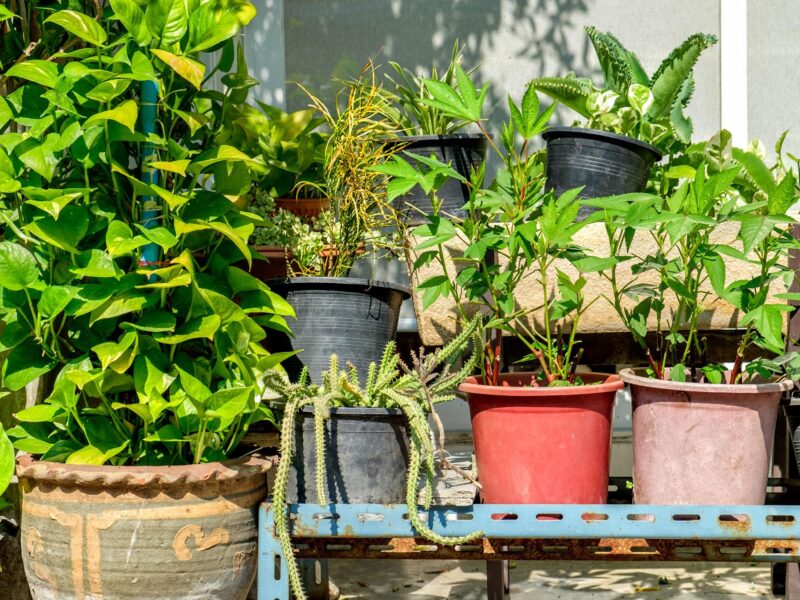
Container plants are especially vulnerable since their soil heats up quickly. Move them into partial shade or under a covered patio when the sun is most intense. Hanging baskets can also be shifted to cooler spots during heatwaves.
If you garden in an area that regularly experiences extreme heat, consider planting taller crops or using trellises to provide natural shade for more sensitive plants below.
4. Keep Containers Cool
Containers heat up much faster than in-ground gardens, especially if they’re made of dark materials. To prevent roots from overheating, use light-colored or insulated pots, and avoid placing them directly on concrete, which radiates heat.
Water container plants more often—sometimes twice a day during heatwaves—and add a layer of mulch on top of the soil to help retain moisture. Self-watering containers or trays that catch excess water can also help keep roots consistently hydrated.
5. Choose Heat-Tolerant Plants
If your summers are consistently hot, it pays to plan your garden with the heat in mind. Opt for drought-tolerant and sun-loving varieties that can handle dry conditions, such as lavender, zinnias, coneflowers, marigolds, and succulents.
For vegetables, consider okra, peppers, eggplant, or sweet potatoes—all of which thrive in heat. Group plants with similar water needs together so you can water efficiently and avoid over- or under-watering.
6. Prune Wisely
Light pruning can help your plants focus energy on survival instead of excess foliage. Remove dead or damaged leaves to improve air circulation, which helps reduce heat stress and prevents disease.
However, avoid heavy pruning in mid-summer. Cutting too much at once can expose previously shaded stems to direct sunlight, increasing the risk of sunscald.
7. Feed Plants Gently
While it’s tempting to fertilize when plants look tired, avoid overfeeding during high heat. Fertilizing stimulates new growth, which requires more water and energy than stressed plants can handle. Instead, use organic compost or liquid seaweed to provide gentle nutrition without overwhelming your plants.
Summer can be tough on gardens, but with consistency and care, your plants can thrive even in scorching conditions. The key is to focus on prevention—keep the soil moist and cool, provide occasional shade, and choose plants suited to your climate.
A garden that’s hydrated and protected is more resilient, producing healthy foliage, bright blooms, and rich harvests long after the heatwave ends. So, as temperatures rise, remember: a little extra attention now ensures your garden stays beautiful, green, and full of life all summer long.