Container gardening is often framed as a consolation prize — something you do if you lack land, permanence, or commitment. A placeholder until “real” gardening becomes possible. This mindset misses the point entirely. Containers are not a compromise. They are a design choice, one that reflects how many people actually live now: mobile, space-conscious, and unwilling to wait for perfect conditions before growing something meaningful.
A serious garden does not require permanence. It requires intention.
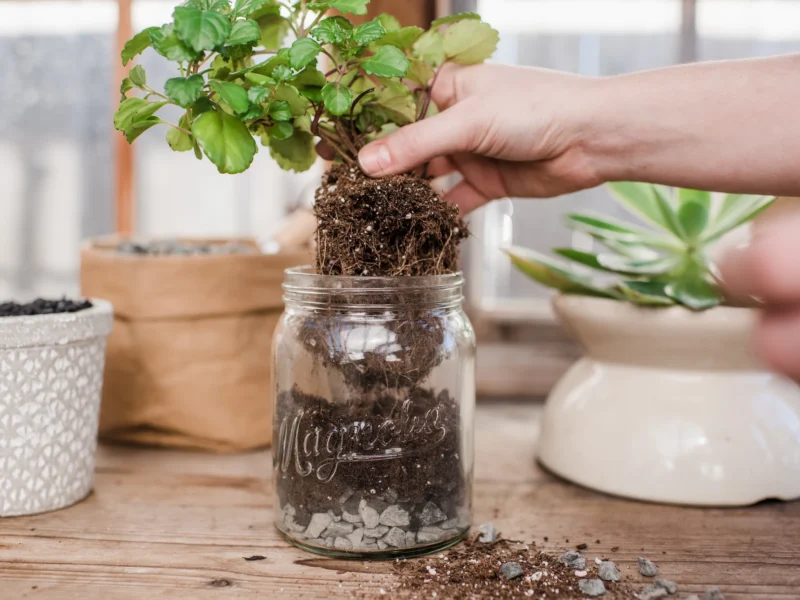
Containers offer a level of control that in-ground gardens rarely do. Soil composition is not inherited; it is chosen. Drainage is deliberate. Sun exposure can be adjusted as seasons shift. When frost threatens or heat becomes excessive, containers can be moved — not as an act of rescue, but as part of the design itself. Mobility becomes a tool, not a weakness.
This matters more than ever in a world where outdoor space is fragmented. Balconies, patios, entryways, shared courtyards — these are not limitations, they are design parameters. A container garden works within them instead of against them. Rather than spreading outward, it builds vertically and intentionally, turning small footprints into layered ecosystems.
Designing a serious container garden starts with scale, not quantity. Too many containers competing for attention create visual noise and drain resources. Fewer, larger containers allow roots to establish properly and reduce the constant need for intervention. Depth matters more than width, especially when designing for long-term growth rather than seasonal decoration.
Material choices also matter. Containers are not neutral vessels; they influence temperature, moisture retention, and root health. Clay breathes but dries quickly. Metal heats fast and cools unpredictably. Wood insulates but requires protection. Choosing containers is an act of environmental design, not aesthetics alone.
There is also a misconception that container gardens are temporary by nature. In reality, they can be deeply perennial. Woody herbs, dwarf fruit trees, evergreen shrubs, and native grasses can thrive in containers for years when given appropriate space and care. These plants anchor a garden emotionally as well as physically, offering continuity even when addresses change.
The holiday season often sharpens this reality. Many people rearrange their homes, rethink their spaces, or anticipate upcoming moves. Containers allow gardens to move with life instead of being left behind. A well-designed container garden carries memory — plants that have witnessed multiple seasons, climates, and transitions. That continuity has value.
Containers also encourage better observation. Because conditions are more concentrated, plants communicate stress quickly. Soil dries faster. Nutrient imbalances show sooner. This feedback loop makes gardeners more responsive and more skilled. Container gardeners often develop sharper instincts because they cannot rely on the buffer of open ground.
There is no hierarchy between in-ground and container gardens. They solve different problems. Containers excel at adaptability, precision, and design clarity. They are ideal for experimenting with plant pairings, testing exposure, and maintaining control in unpredictable environments. In many cases, they outperform traditional beds simply because they are managed with more attention.
A serious garden is not defined by acreage. It is defined by care, observation, and respect for the system you are working within. Containers honor the reality that space, time, and stability look different for everyone.
In a small, movable world, containers do not limit what a garden can be. They expand it — quietly, deliberately, and on your own terms.